Why use an old digital back instead of a modern medium format camera? My review of the Mamiya ZD digital back: colors, sharpness, dynamic range and quirks.
The Contax 35mm SLR system (C/Y mount) doesn’t get the hype of the Contax point and shoots or the 645, but it’s my favorite 35mm SLR system. Here’s why.
Canon was late to the mirrorless party, but the R system is finally catching on. My thoughts on the Canon EOS R8, its lenses, image quality and autofocus.
CCD-sensor cameras are the new film trend. I tested a bunch of APS-C and medium format CCD cameras to see which ones actually have special colors.
DxO Pure Raw uses machine learning to give cleaner, more detailed raw files. Here are my quick conclusions after playing around with it.
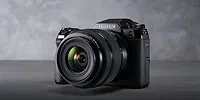
Why I bought a Fujifilm GFX 50S II, and why I sold it again just 1½ months later: the colors, the lenses and the size just weren’t for me.
I’ve been using the Zeiss Touit 32mm f1.8 on Fujifilm X mount for a year. Here are my thoughts on its autofocus, busy bokeh, colors and that Zeiss pop.
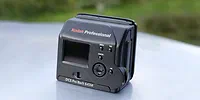
Kodak DCS Pro Back 645 review: a 20-year-old medium format CCD digital back with film-like colors. Image quality, lenses, quirks, tethering and tips.
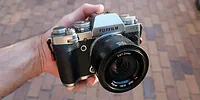
Did the old Fujifilm sensors have something the new ones don’t? My take on the colors, dynamic range and autofocus of X-Trans 1, 2, 3 and 4.
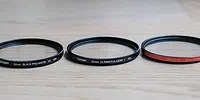
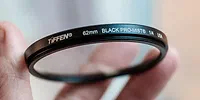
A side-by-side test of three diffusion filters, Tiffen Black Pro-Mist 1/4, Tiffen Glimmer Glass 1 and Moment Cinebloom 10%, on bloom, contrast and sharpness.
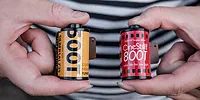
I’m back shooting analog film, chasing the cinematic look. Silbersalz Vision3 500T vs. Cinestill 800, the Canon EOS 33V, scanning, metering and filters.
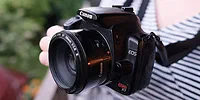
What if I’d bought a Canon EOS 350D back in 2006? I picked one up for 20 euros to find out how this early-2000s DSLR holds up today.
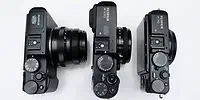
Fujifilm X cameras are all pretty small, but which are the smallest? I compare the three most compact options: the X70, the X100 series and the X-M1.
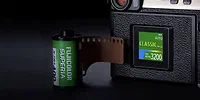
Fujifilm Classic Neg settings for night street photography: inspired by Big Head Taco, I shot the Danish winter lockdown with this film simulation.
Tiffen Black Pro-Mist for photographers: how I use this diffusion filter for night street photography, which strength to pick and what it does.
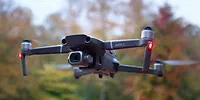
DJI Mavic 2 Pro review from a photographer’s point of view after a year of use: image quality, raw editing and whether the drone is worth it.
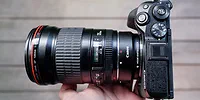
My search for a small tele prime setup led me to the Canon EOS M6 Mark I and Mark II with an adapted Canon EF 135mm f2 L USM. Here’s how it went.
After the Fujifilm X-T3’s sensor disappointed me, I tried Sony full frame with the A7R III. My thoughts on image quality, lenses, autofocus and those colors.
Practical Fujifilm X camera tips: base ISO, stabilization and shutter settings, plus how to get sharper raw files in Capture One and Lightroom.
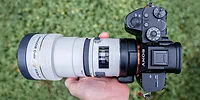
Can you use old Minolta A-mount lenses on a Sony A7R III? I tested the Sony LA-EA4 adapter with the Minolta AF 200mm f2.8 to find out.
Short, honest reviews of every Fujifilm X camera, lens and accessory I’ve used, with my favorites marked, to help you pick new or used gear.
Analog film part 2: why I shoot film, what I learned in 2018, and my thoughts on Canon EOS and Mamiya 645 cameras and Kodak Ektar film.
Photographing people on bikes in Copenhagen is harder than it looks. Here are some of my favorite bike shots from the past year.
The Fotodiox Rhinocam lets you put medium format lenses on an APS-C or full frame camera and stitch up to 8 shots into one huge, high-resolution photo.
I tested my old Mamiya 645, Pentax 645, Pentax 6×7 and Pentacon Six lenses on a Fujifilm X-T20 for sharpness, rendering and bokeh. Here’s how they compare.
A short review of the Fringer Canon EF to Fujifilm X smart adapter, which brings autofocus to Canon lenses on Fujifilm X cameras, plus a 2023 update.
My first steps into analog film: Mamiya 645, Pentax 6×7, Pentax 645N, Yashica Mat, Cinestill 800 and more, plus the mistakes I made so you can avoid them.
Fujifilm XF 56mm f1.2 vs XF 50mm f2: how they compare on size, price, aperture, close focus and image rendering, and which one I’d pick.