Things finally seem to be going the right way for Canon again. They were late to the mirrorless party, with only the entry-level Canon EF-M system for many years, while Sony and even Fujifilm were dominating. But it seems the Canon R lineup has become popular despite the late start, at least that’s what I hear.
I’ve bought (and sold again) many Canon cameras over the years. They do have something interesting about them, but they also feel a bit average or boring. When I think of Canon, I often think of cameras from the 00’s, when Canon was king. Most of the famous press photos from back then were shot on digital Canons, and I loved the look. But to me, Canon still feels a bit stuck in time.
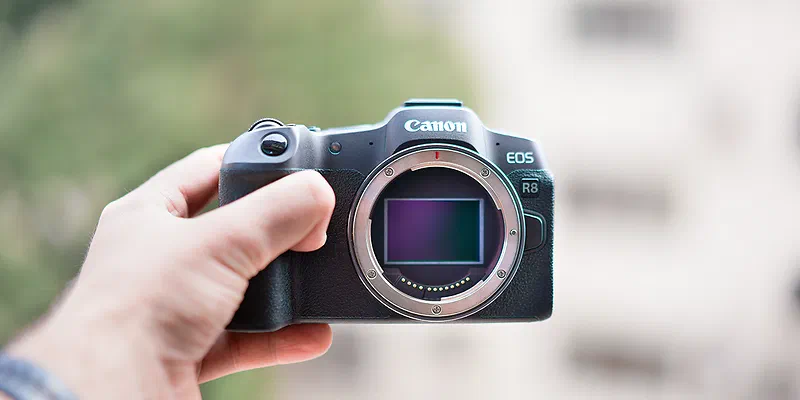
So I didn’t have high hopes, but I did end up picking up a Canon EOS R8 on Black Friday, plus a Canon RF 35mm f1.8 Macro IS STM and a Canon RF 50mm f1.8 STM. The Canon EOS R8 is an entry-level full frame camera, but it shares its sensor with the Canon EOS R6 Mark II, minus the IBIS and the dual card slots. Both are features I can live without when just testing out the R system.

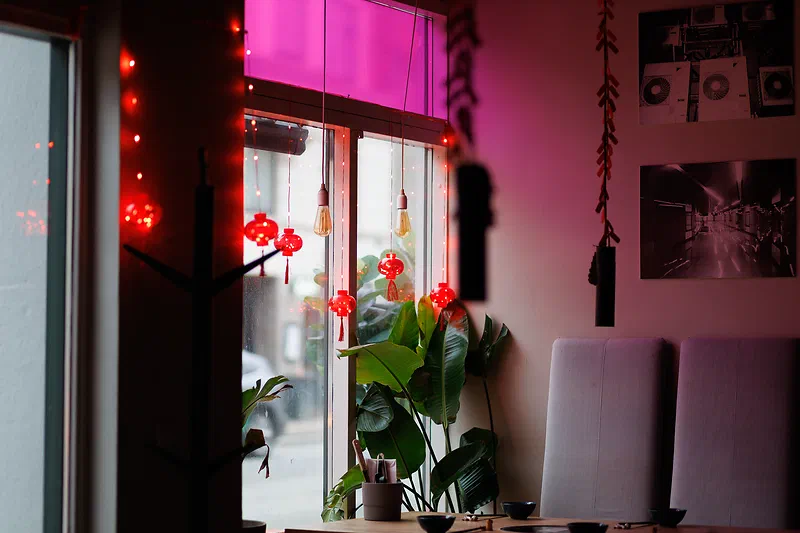
Shot on Canon EOS R8 + Canon RF 35mm f1.8 Macro IS STM
The lens problem
The two lenses I bought, the Canon RF 35mm f1.8 Macro IS STM and the Canon RF 50mm f1.8 STM, are also entry-level lenses, and this is one of the R system’s biggest flaws: there’s a very limited selection of affordable lenses. Sure, Canon launched the R system with high-end f1.2 lenses, but they are insanely expensive and also very big and heavy. Even if I really bought into the Canon R system, I don’t know if I’d want to put that much money into one focal length. And then there’s the size: if lenses are too big, I never bring them.
That’s why I went with these cheaper lenses. The problem is that they are only slightly updated versions of the equivalent EF lenses, a bit sharper but nothing that will really wow you. The 35mm f1.8 is an OK lens, and I’d keep it if I kept the R8. The 50mm f1.8 seems almost identical to the EF version, which is a bit disappointing.
To make things even worse, Canon banned third-party autofocus lenses a few years ago, so we’re stuck with what Canon makes. The only plus when it comes to lenses is adapting older Canon EF lenses. They perform almost natively with the Canon adapter, so the EF to R adapter is a must-have. There are many great old EF lenses. They may not be as sharp as the newer RF lenses, but they’re cheap, and for some lenses sharpness isn’t everything. For example, the Canon EF 85mm f1.8 USM is actually pretty good adapted for portraits. It’s not the sharpest, but I had a lot of fun with it. I also adapted my Sigma 35mm f1.4 Art lens. The image quality from that is very good, but with the lens and adapter it’s a really heavy setup.


The flip out screen nightmare
Why put a flip out screen instead of a standard tilt screen on a photo camera? I’ve written about it before, but in short: I think camera makers put flip out screens on photo cameras because today’s YouTube camera influencers love them, since they’re vloggers themselves, not because users want them. Since I wrote my blog post about it, Fujifilm has backtracked and now only uses the flip out screen on its video-focused cameras. Bravo, Fujifilm. But Canon, why? For me it almost ruins the entire experience of shooting with the camera: fiddling around with that stupid screen when trying to take a sneaky street shot. It just reinforces my impression of this as a very dull camera that isn’t really aimed at anybody.
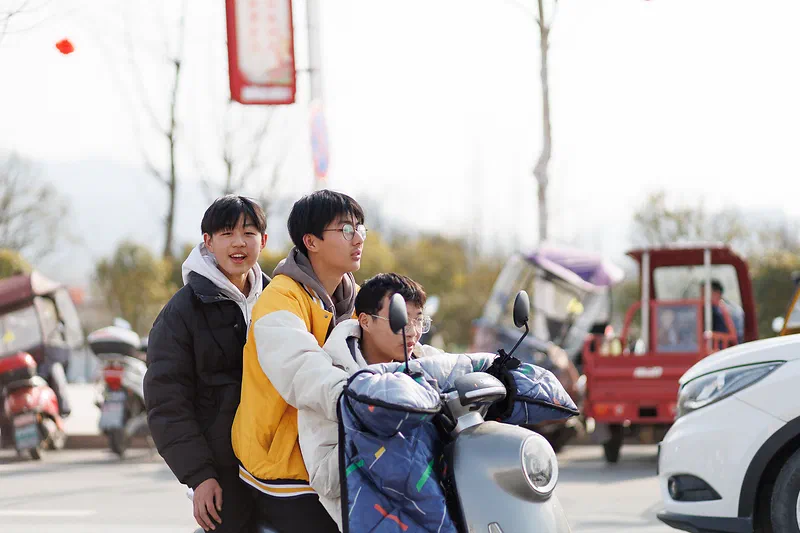
Shot on Canon EOS R8 + Canon EF 85mm f1.8 USM – A scooter driving by. Even with this old EF lens, autofocus works great.
Mediocre image quality
First of all, how can I judge the camera’s image quality when I’ve only used entry-level lenses on it? The good lenses for this camera are so expensive that I’d never buy them, while the competitors have many cheap lens options. For example, many of Sony’s best-performing lenses are very affordable, like the Sony 85mm f1.8 or the Zeiss 55mm f1.8.
If I had to rank the image quality against other cameras, I’d probably put it somewhere between an APS-C Fujifilm camera and a Sony full frame camera. Compared to the Fuji, it has slightly better ISO performance and a tiny bit of that full frame pop. Compared to the Sony, it’s nowhere close when it comes to ISO performance, dynamic range or that full frame pop.
Color-wise, I personally prefer Fujifilm’s colors (out of today’s mainstream cameras). Sony’s colors are ugly in daylight (but fine in artificial lighting, like night street photography), and Canon’s colors are in between: not ugly, but not that pretty either. They do the job, but don’t inspire you much.
Still, it’s a great all-around camera for image quality and colors, and down the line, new Canon R cameras will probably improve on this and bring better and cheaper lenses.

Autofocus
Autofocus is probably Canon’s biggest strength these days. The focus point sticks to whatever you point it at, better than Sony and better than Fujifilm. If you like to shoot moving subjects, this is a big plus. For me it doesn’t matter that much. The autofocus I got from other cameras four-ish years ago was already fine for me, but for YouTube reviewers autofocus is so important that it always takes up at least 30% of their reviews.

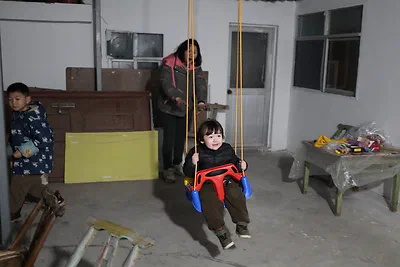
Shot on Canon EOS R8 + Canon EF 85mm f1.8 USM – Chinese sugarcane street seller.
Conclusion
Is it better to be average, or is it better to stand out even with some flaws? A few years ago I wrote about the Sony A7R III and said that camera wasn’t for me. But that camera has some things it’s really good at, things it’s the best at. The Canon EOS R8 (and I suspect all the other Canon EOS R cameras) doesn’t have anything it’s really the best at (OK, maybe autofocus, but who cares about that). It’s a good, average camera, but also forgettable. If you’re a professional photographer who just needs a camera that does the job, it could work. For me, a hardcore photography nerd who has tried most camera systems, it’s not very interesting, and I’m going to sell mine.

Shot on Canon EOS R8 + Canon RF 35mm f1.8 Macro IS STM – Great lighting in this scene, but the result is meh, and the colors are a bit ugly.
Video
Here’s a video that covers most of the things in this blog post, if you’d rather watch than read.
More photos