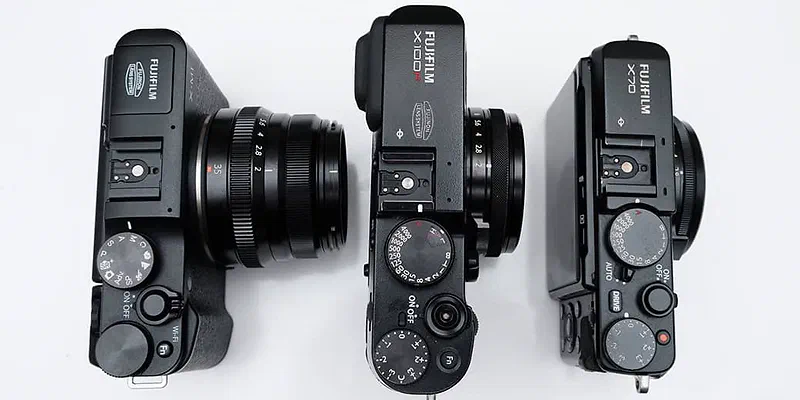
Fujifilm X cameras are all pretty small, but which ones are the smallest? I picked out the three smallest options and compared them.
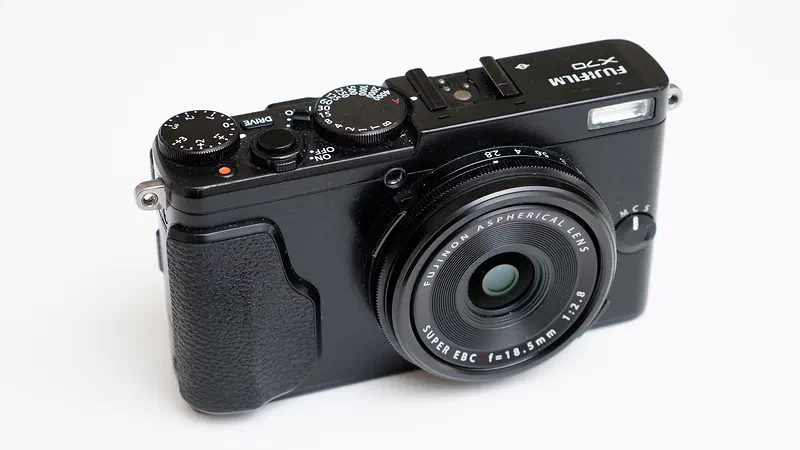
Fujifilm X70
This camera has a fixed 18mm f2.8 lens and the X-Trans II sensor, and it’s the smallest Fujifilm X camera with an APS-C X-Trans sensor you can get. There’s also the newer Fujifilm XF10 with the same lens, but I personally don’t like it because it doesn’t have an X-Trans sensor.
Pros
- It’s so small you can almost fit it in your jeans pocket.
- The small size also means people pay less attention to you. To most people it just looks like a point-and-shoot, not something that draws attention.
- Fast autofocus: It’s an old camera, so you won’t get X-T4 autofocus, but it’s faster than other X-Trans II cameras. I think that because it was the last X-Trans II camera to be released, it got a lot of the newer features that went into the X-Pro2, which came out at the same time.
- The video is actually usable. It’s not as good as the video from an X-T2, but it’s better than on any other X-Trans II camera. I use the PRO Neg. Std film simulation for video with -2 color, -2 highlights, -2 shadows and -2 sharpness, which gives something close to F-Log.
- X-Trans II is an old sensor, but it’s one of my favorites. The Provia film simulation looks amazing on it: great for summer photos, with really beautiful colors.
- The 18mm lens is great. I’m not a fan of the focal length, but when I look at the photos I’ve taken with this camera, they have a kind of magic to them.
- The screen flips up, so you can take sweet selfies.

Cons
- It’s not cheap anymore: The camera is no longer in production, and no newer X70 model was ever released. It wasn’t very popular at launch (I think because it came out at the same time as the X-Pro2, which had the newer sensor), so there aren’t many used ones out there. But today the camera has cult status in the Fujifilm community; if you’re a hardcore Fujifilm fan, you have to own one. All of this has made the price go up and up.
- X-Trans II is an old sensor, and its low-light performance is lacking (X-Trans III is great up to ISO 6400, X-Trans II is only good up to ISO 3200). Combined with the f2.8 lens, this is not a night camera.
- There’s no EVF, so you can only use the screen, which can be hard to see on a sunny day.
Should you get it? The question is whether 18mm street photography fits your style. Personally, it’s not my style; I prefer longer focal lengths. But I own this camera simply because I think it’s so awesome.
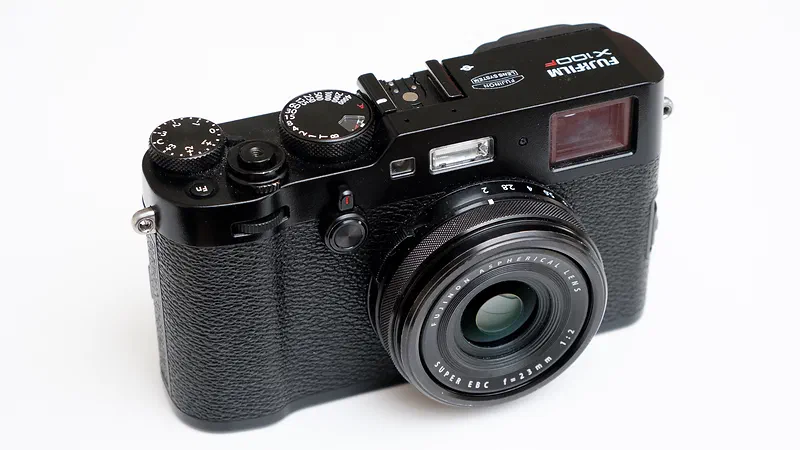
Fujifilm X100-series
This is one of my favorite cameras. The X100S was my first Fujifilm camera, and it’s why I fell in love with Fujifilm. Today there are many versions to choose from (from oldest to newest): X100/X100S/X100T/X100F/X100V
Pros
- Fujifilm has released a lot of X100-series cameras, so there are many options depending on your budget. If you don’t need fast autofocus, I recommend going for a cheaper X100S or X100T. If you want something newer, go for the X100F or X100V.
- It’s small: small enough to fit in your jacket pocket, though not in your jeans pocket.
- I like the lens. 23mm is a great focal length, and f2.0 works well at night too.
- Built-in ND filter. For some reason I really like the built-in ND filter; it gives the photos a cool tint, and it also seems to tone down the highlights, which I really like.
Cons
- It’s not as small as the X70, so it does draw more attention. It’s almost as big as an X-T10/X-T20 with a lens, but you can’t change lenses. The question is whether you need this camera if you already own another small Fujifilm X camera with interchangeable lenses. I’m not sure.
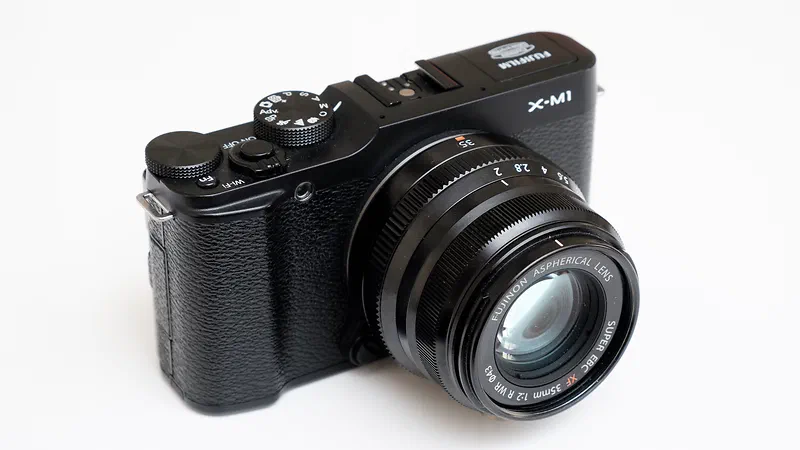
Fujifilm X-M1
This camera isn’t very well known in the Fujifilm community, probably because it was released early on and was quickly overshadowed by newer cameras with more features.
Pros
- It’s the smallest Fujifilm X camera with an APS-C X-Trans sensor and interchangeable lenses. I use it with my Fujifilm XF 35mm f2.0, which gives me a small camera with a tele lens.
- It’s very cheap. I bought mine used for 100 euros. People have forgotten about this camera.
- With a small lens, it can just about fit in a jacket pocket.
- It’s very small but still has room for a flip screen. There’s no viewfinder, though.
- The X-Trans I sensor in this camera gives some beautiful colors. I recently took it on a trip to Malta, and compared to my X-T2, I prefer its colors for those summer days.

Cons
- The autofocus is not good. The X-Trans I sensor only has contrast-detect autofocus (I think X-Trans II is basically the same as X-Trans I but with phase-detect autofocus). In daylight it’s OK for still subjects, but at night it hunts a lot. Continuous autofocus is completely broken. It doesn’t work at all, so don’t even try it.
- If you want a small interchangeable-lens camera, you’re probably better off with something a bit bigger and a bit newer, like the Fujifilm X-10/X-T20. For me personally, the bad AF is a deal breaker, but I love the old sensor, so I keep an old X-T10 for those nostalgic moments.