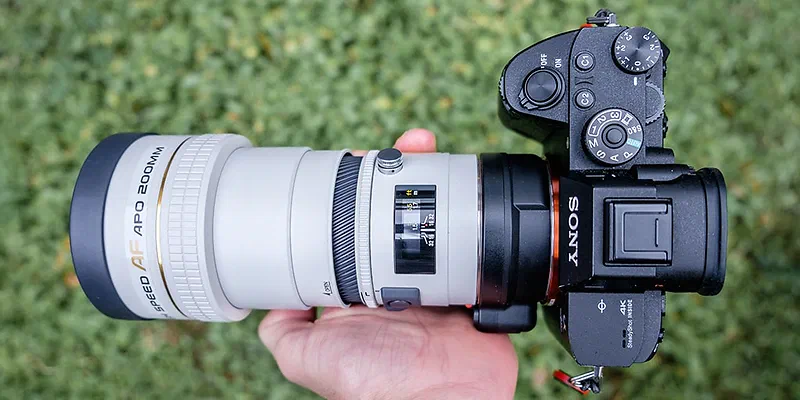
I recently got myself a Sony A7R III. To my surprise, I found out that you can mount old A-mount lenses on it with an adapter, and that sparked my interest. This is a review of the adapter and the A-mount lens I got for it. I want to find out whether this setup is actually usable, because there are some cool old A-mount lenses out there.
The A-mount is Minolta’s old lens mount, later taken over by Sony. A few years ago Sony introduced a new lens mount called E-mount, and to help existing Sony users, they made adapters for A-mount lenses. For newer A-mount lenses you can use the cheaper and smaller Sony LA-EA3 adapter. But older lenses that rely on the “screw drive” motor inside the camera to autofocus need the bigger and more expensive Sony LA-EA4 adapter.

I decided to get the Sony LA-EA4 together with a “Minolta High Speed AF Apo Tele 200mm f2.8 G New” lens. Many people praise it as one of Minolta’s sharpest lenses.
But why buy this lens in 2019? Sony’s E-mount lens lineup has gotten a lot better over the last couple of years, but I still wish there were more long telephoto primes. I ended up buying the Sony FE 70-200mm f2.8 as well, but it’s very big and expensive. Sony has a 400mm f2.8, but it costs $14,000. There’s also a newer Sony 300mm f2.8 for A-mount (without screw drive autofocus) that can be used with the LA-EA3 and should have close to native autofocus performance, but it’s also an expensive lens.

When you get the lens and the adapter, the first thing you need to do is adjust the autofocus. The Sony LA-EA4 has a translucent mirror inside (just like the old Sony A-mount cameras), and with any mirror-based camera you should fine-tune the focus for each lens, because the distance to the AF sensor varies slightly from camera to camera and lens to lens.
You do this in the menu: in the first tab (camera icon), on the last page of AF settings (page 8 on the A7R III), go to AF Micro Adj. Here you can add or subtract to get the focus right. I had to enter -7. You can figure out the value by shooting something like a ruler with millimeter markings, focusing on one point and seeing how far off the focus is. Or get a proper printed focus calibration chart. Google it – there are lots of guides out there.
One downside of the adapter is that the mirror blocks 1/3 stop of light, so you’ll have to raise your ISO a bit.
Another limitation of the A-mount adapters is that you don’t get the normal E-mount focus options. You’re limited to a few focus points in the middle. Not a big deal, you might think, but you’ll miss out on object tracking, Eye AF and all the focus options you normally have. That’s a deal breaker for me.
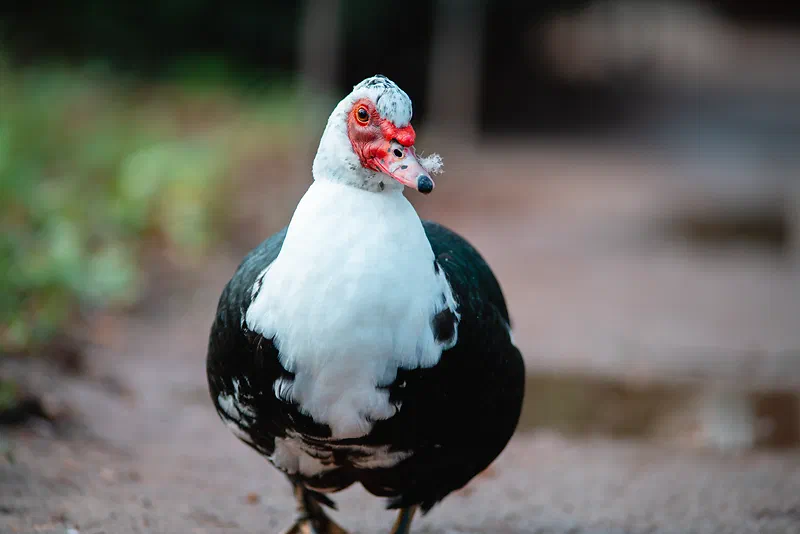
How well does autofocus work?
In single AF: it works, even though it’s a bit slow. For subjects that don’t move, this lens and adapter combo is fine.
In continuous AF: it will try to focus and refocus, but it isn’t really usable. It only refocuses every 1–2 seconds, so all the shots in between are out of focus. Even worse, it sometimes misses focus completely and then struggles to find it again. If you plan to buy this for continuous AF, don’t. For the photos you see here, I had to take a lot of other shots that ended up out of focus. Not worth the time.

So how sharp is this lens?
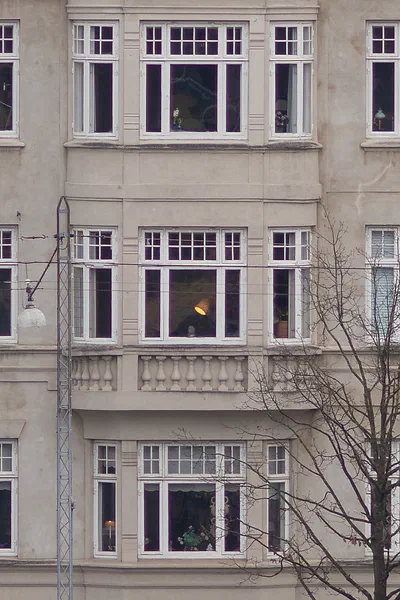
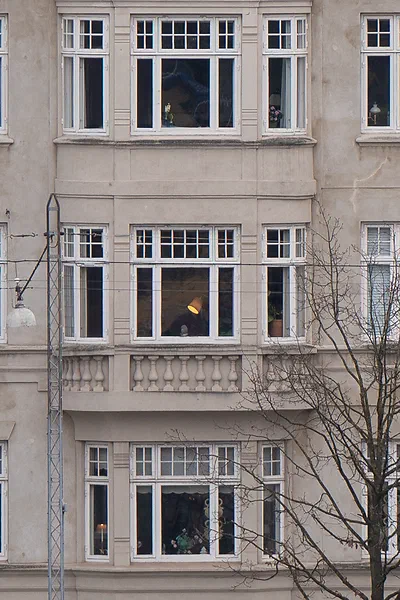
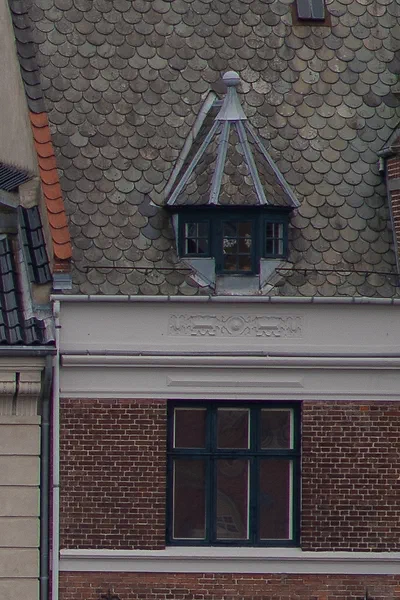
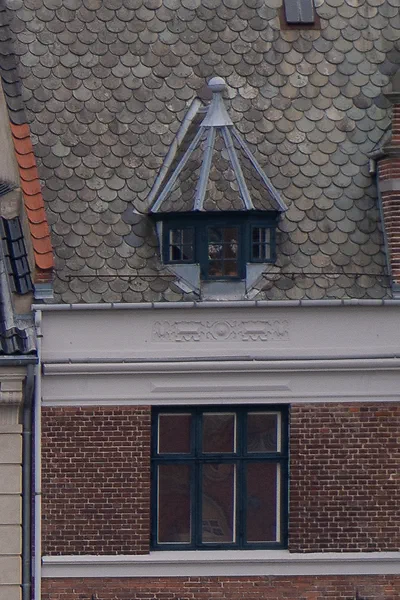


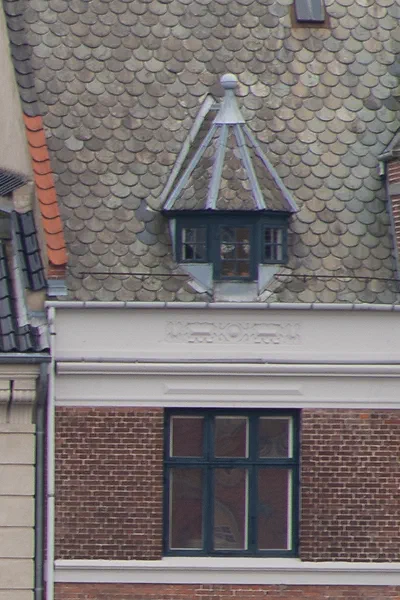
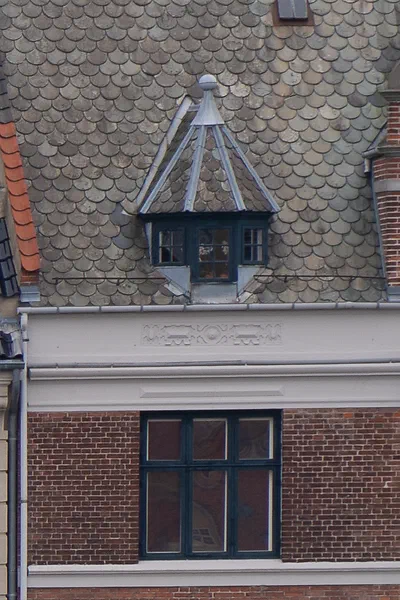
Looking at the test shots, the Sony is clearly sharper than the old Minolta. The Minolta also shows some bad color fringing, which the Sony doesn’t have at all. The Sony seems to have a little barrel distortion, but very little, and it’s easy to correct.
Note: The Minolta almost looks softer at f9. I took several shots and autofocused each time, and they all look like that, so either it gets softer at f9 or it’s just my copy.
My conclusion is that it’s very usable and probably better than most lenses from the ’80s. But why buy such an expensive camera and put a soft lens on it? Maybe if you’re a lens history geek or want a different kind of look. But for me, after seeing these test shots, I’m going to stay away from old Minolta lenses.
My conclusion
Pros:
- It’s a pretty small 200mm lens compared to the other long telephoto options for Sony.
- The bokeh is very smooth.
- Minolta and old Sony A-mount lenses are pretty cheap.
Cons:
- Autofocus is too slow to be usable.
- The focus options are too primitive.
- The mirror in the adapter blocks light, so you lose 1/3 stop.
- It’s pretty sharp for such an old lens, but not that sharp compared to modern lenses.
- The image rendering is a bit ’80s. People call it the Minolta look, and I’m not a big fan. You often get color fringing, and people end up with an extremely red look, as if they were bleeding from their eyes. You can often fix this in post.
Also read my full review of the Sony A7R III and native Sony lenses here.
Useful links: